
People · 9 September 2025
Staying close when the miles are real
Updated 24 September 2026, with the clock offsets for the weeks after the return to GMT.
A missed evening is usually a planning error that gets blamed on the network. Someone dialled an hour early because they still had last year’s offset. Someone stored 0661… in a French phone, so the call never left France. Someone tried a video call from a stairwell and, when it failed, sent nothing. The radio is one piece. The rest is a written agreement between two households.
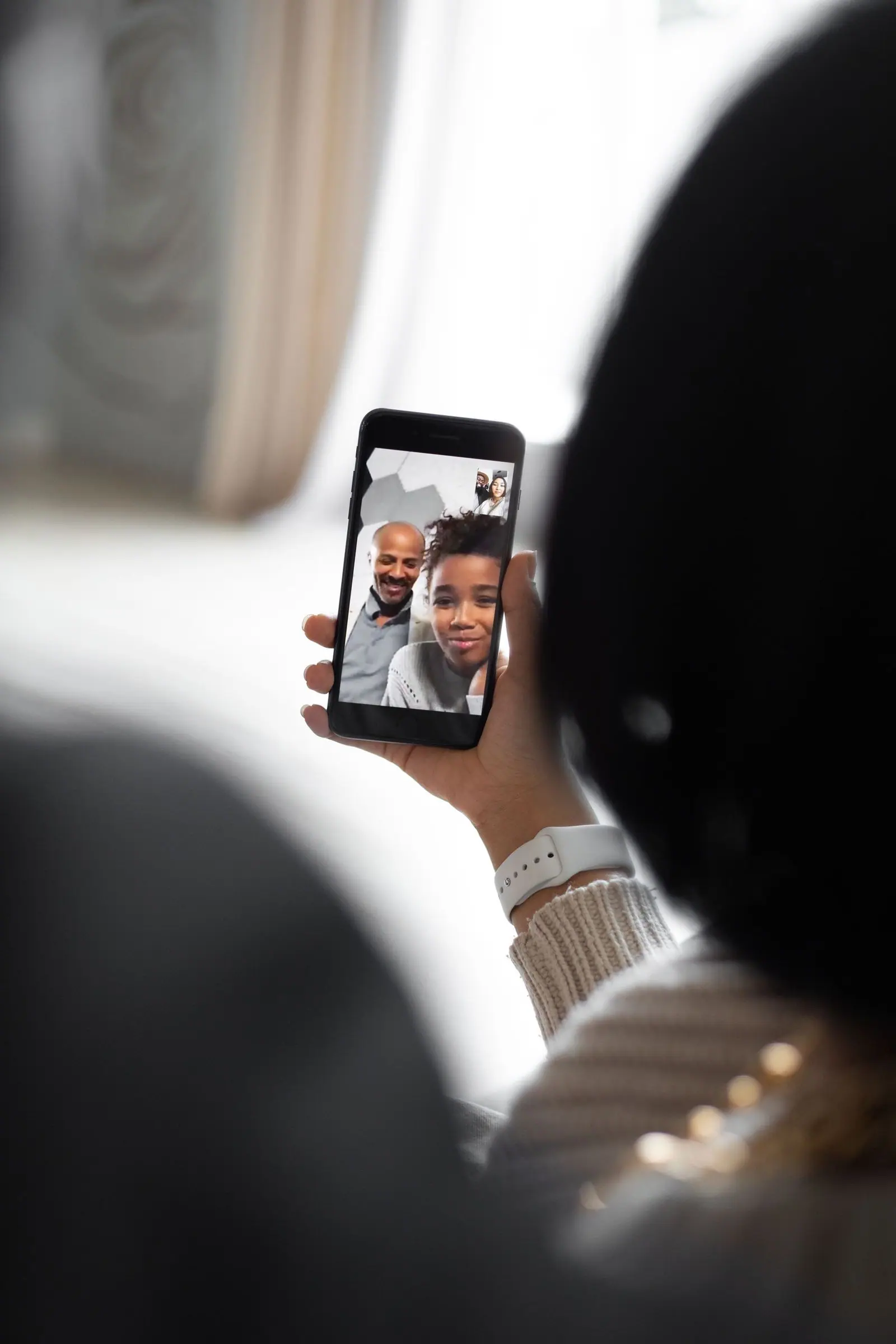
Agree the channel before the day gets noisy
Pick one path for ordinary news and a second path for “I am fine, the first path failed.” A messaging app can be the ordinary path. A plain SMS, which uses the mobile network rather than a data session, is often the spare. Write both choices down. Families lose hours because each person assumes the other is watching a different app.
If someone is travelling, agree the message that means they have landed, and the time after which the other person may worry. A single sentence sent from the airport Wi-Fi is kinder than a video call attempted while a taxi meter is running. More on the difference between those tools sits in calls, texts, and data messages.
A rhythm that survives a missed call
A standing time is easier than a spontaneous one, and it is easier still if missing it is not a crisis. Choose two windows a week rather than a demand that every evening align. If the call fails, the backup message goes out inside a few minutes: “Could not connect. I am fine. Try tomorrow at the same time.” Silence is what frightens people. A short text is the repair.
Children and older relatives may not want the same medium. A voice note can be replayed. A live video can feel like a test. Ask, instead of upgrading the technology because it is available. The point is the person, not the feature list on the phone.
Low-bandwidth ways to say you arrived
- A text or a short voice note, not a stream.
- A photo sent later, when you are on Wi-Fi, rather than five photos from the kerb.
- An offline map downloaded before you leave the hotel or the house.
- A shared note with the address written in the local alphabet and in Latin letters, so a taxi driver and a relative abroad can both read it.
The clock, after 20 September 2026
Morocco returned to Greenwich Mean Time, UTC+0, at 02:00 on Sunday 20 September 2026, under Decree No. 2.26.530. For years before that the country had kept UTC+1 for most of the year, with a return to GMT during Ramadan that relatives abroad still remember. That memory is now a trap. Do not reuse last year’s offset, and do not assume the Ramadan shift you knew in 2019 still describes this autumn.
On Thursday 24 September 2026 the other two clocks people in this country actually call have not moved yet. The UK is on British Summer Time, UTC+1, until 25 October 2026. France and Spain are on Central European Summer Time, UTC+2, over the same stretch. So:
- 18:00 in Casablanca is 19:00 in London and 20:00 in Paris or Madrid, through 24 October.
- On the night of 25 October 2026 the UK returns to UTC+0 and France and Spain return to UTC+1. From the next morning, Casablanca and London match, and Paris is one hour ahead, until the UK and the EU spring forward again in 2027.
- A relative in Montreal or New York is on a different offset again. Say both cities out loud once when you fix the weekly slot: “Sunday 18:00 in Casablanca, which is … where you are.”
Phones usually follow if automatic time is on. A kitchen clock, a written card on the fridge, and an elderly relative’s habit will not. The first fortnight after a change is when people dial an hour early, get silence, and decide the line is dead. Send the backup text anyway: “I called at your 19:00, which was my 18:00. I am fine.”
A card both households can read
Write this down once, on paper or in a note that is not only inside the messaging app. Include the country code. Moroccan mobiles drop the leading 0: 0661 23 45 67 on a local bill is +212 661 23 45 67 from abroad. Read the digits back on a call that does connect. One transposition looks like a fault.
- Full international number of each adult, and which line is the data line if the phone has two.
- The ordinary channel (often a messaging app) and the spare channel (often SMS, which does not need a data session).
- Two weekly windows, stated in both cities.
- The sentence that means “I have landed” and the number of hours after which the other household may worry.
- A neighbour or a building guardian for the household whose indoor coverage is poor. Their number in international form too.
- The address in Arabic and in Latin letters, so a taxi driver and a relative abroad can both use it. A pin dropped while you still have Wi-Fi at the airport is a useful extra, not a substitute for the words.
Arrivals, in order
At Mohammed V, or at any other airport, the order that causes the least panic is dull. Join the airport Wi-Fi or wait until the phone shows a Moroccan network name rather than the airline’s departure country. Send one sentence: landed, fine, calling from the flat. Do not attempt the family video while a taxi meter is running and the phone is still choosing a network. If the handset shows a foreign operator after you are clearly in the city, airplane mode for ten seconds forces a fresh attach. Near Ceuta or Melilla a foreign name can also mean the phone has camped across the border; check before you stream.
Power is part of the plan. A video call from 20 percent battery in a riad with no socket nearby will be blamed on coverage. Charge before the agreed window. If the building cuts power in the evening, say so in advance and move the call to the room where the router and the phone can both last.
When the call does not happen
Silence is the part that frightens people. A failed video is not an emergency if the spare text goes out inside a few minutes: “Could not connect. I am fine. Same time tomorrow.” Agree that sentence before you need it, in the language the other person actually reads. Children and older relatives often prefer a voice note they can replay to a live video that feels like a test. Ask. Do not upgrade the medium because the phone offers it.
If a particular room never completes a call, the next reading is coverage, then a question to the operator that serves that room. Nothing on this page requires a new subscription from anyone, including us.