
Places · 5 February 2026 · updated 24 September 2026
Reading coverage without trusting a single bar
A bar is a hint about the radio hop. The country around the phone decides what that hint is worth.
Coast and large cities
Casablanca, Rabat, Tangier, and the other large coastal cities are where mobile sites are densest. Density is not uniformity. A seafront avenue and a ground-floor shop behind a bus stop can differ. Glass towers sometimes reflect radio in ways that help one window and hurt the next. Test the desk you will actually sit at, not the lobby where the letting agent stood.
5G licences awarded in 2025 came with public coverage commitments that increase over time. Even where a city is on a map, a given handset may stay on 4G because of the plan, the settings, or the bands that phone supports. 4G that finishes your task is a success. The generation label is not the task.

Medina streets and thick walls
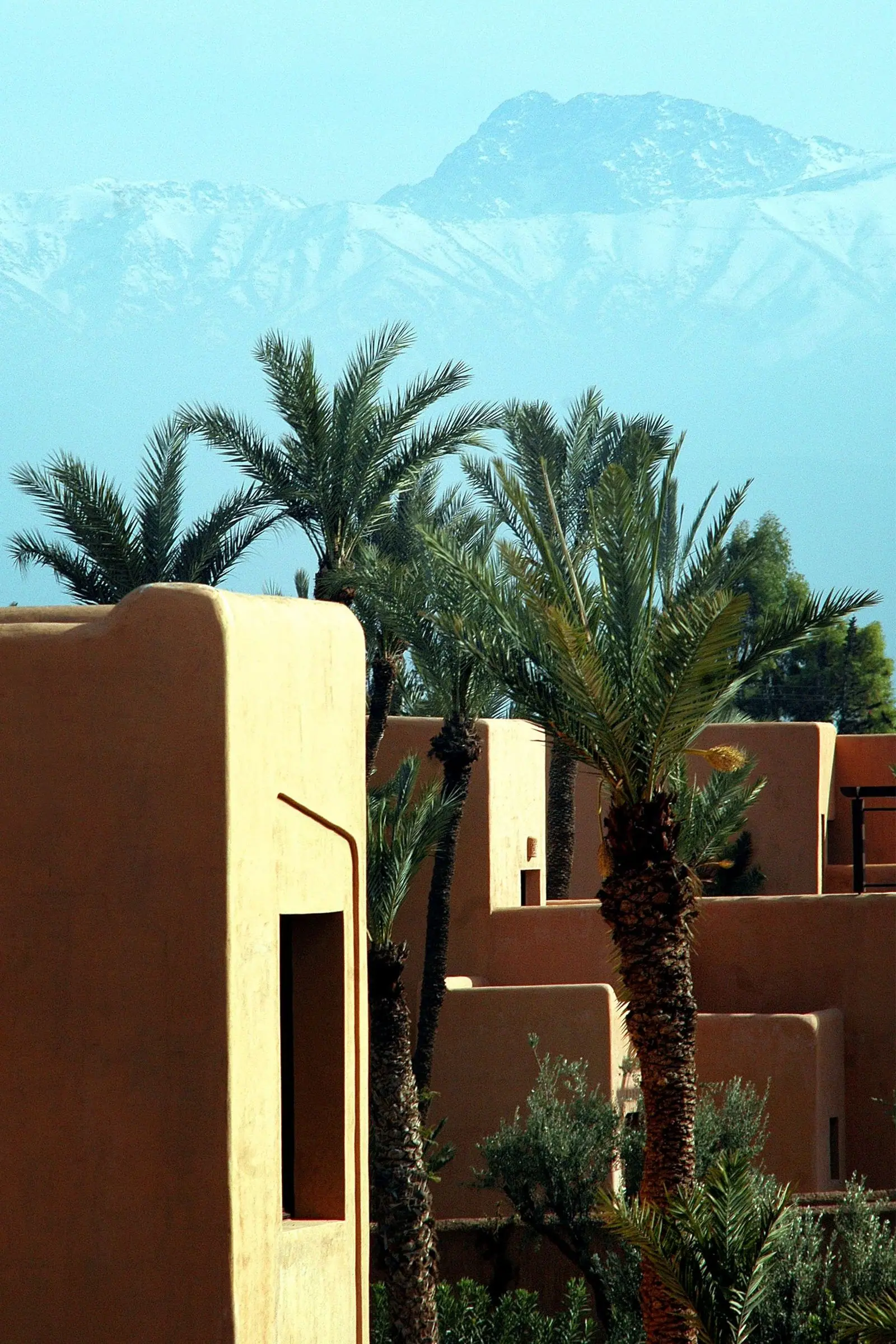
Essaouira, Fes, Marrakech, and the older quarters of other cities put stone, packed earth, and narrow sky between a phone and a site. Outdoor alleys may work. A room two turns from the street may not. Wi-Fi from a riad’s router, if you trust that network, can carry the evening better than the outdoor radio. Ask which name is the house network. The habits are in the Wi-Fi note.
Apartment buildings
Basements, elevator shafts, and rooms faced with metal shutters are regular dead zones. A balcony test that succeeds does not redeem a bedroom that fails. If calls matter in that bedroom, try Wi-Fi calling only after you know the operator supports it, or plan to step into the room that works.
Hills, the Atlas, and the open road
Valleys and switchbacks hide sites that a map, drawn from a town, made look close. Download offline maps before the climb. Tell someone the town you expect to regain a signal in, not a fantasy of continuous video from the pass.
Desert roads add distance. A dune photo is not a coverage map, and a coverage map is not a promise for the next fifty kilometres. Carry the spare message habit from staying in touch: send news from the last town, and again from the next one.

A fair way to test a place
- Stand where you will use the phone, not on the roof unless you live on the roof.
- Place a one-minute voice call.
- Load a simple page or send a photo, and notice whether it finishes.
- Repeat at the time of day you care about. Evening load is a different network from a quiet morning.
- If you are choosing a long stay, ask a neighbour what they use indoors. Then still test. Their operator is not automatically yours.
Maps from operators
Each licensed operator publishes material about where it says service is available. Use it to avoid a completely implausible expectation, then believe the test in the room. Marketing maps and engineering predictions both go stale. A 5G licence is a further temptation to over-read a map: on 25 July 2025 ANRT recorded commitments to cover 45 percent of the population by the end of 2026 and 85 percent by the end of 2030. Population coverage is not the platform at Casa-Voyageurs, the interior of the Hassan II Mosque, or the next fifty kilometres of desert road. ANRT lists the operators. It does not rank them for your apartment. Neither do we.
Trains and coaches add a moving version of the same problem. A call that holds in Rabat Agdal can drop in a cutting and return near the next town. Download the ticket and the address before you board. Tell the person meeting you the station, not a promise of a running commentary from the carriage. Tunnels and lifts are dead zones even in cities where the street outside is crowded with sites.
What to record if you are choosing a long stay
Spend one evening and one morning in the rooms you will actually use. Evening load and a quiet morning are different networks. Write the network name, whether voice connected, and whether a simple page finished. Ask a neighbour what they use indoors, then still test: their operator is not automatically yours, and their balcony is not your bedroom. If the street works and the room does not, a house router solves more evenings than a different SIM, provided you trust that Wi-Fi. The habits are in the Wi-Fi note. The pieces of the network you are testing are sketched in how a mobile network is put together.